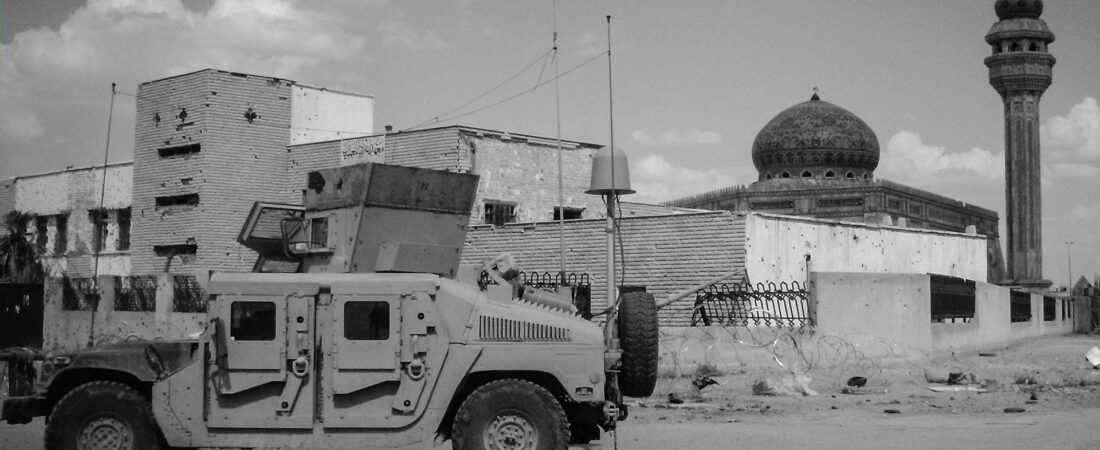
In the shadow of the Iran‑USA‑Israel‑Hezbollah war, we must ask: is any of this worth it? Looking at Cambodia (1978) and Iraq (2003) reveals a brutal truth about regime change – stopping a massacre is not the same as building a state. And the human and economic costs of forgetting this are staggeringly high.
As missiles fly between Iran, Israel, and Hezbollah, and as the United States stands once again on the brink of deeper military entanglement in the Middle East, a quiet question echoes beneath the rhetoric of retaliation and deterrence: Is any of this worth it? Will bombing another country’s leadership bring stability? Will toppling another regime produce a functioning democracy? Or will it – as it has so many times before – unleash a spiral of chaos,as we see today suffering, and economic ruin that far exceeds the original grievance?
We cannot predict the future. But we can look to the recent past. The precedents of Cambodia (1978) and Iraq (2003) are not ancient history. They are living warnings about what happens when great powers convince themselves that military force can solve political and moral problems. This article revisits those two cases to extract a sobering lesson for today’s escalations: regime change by bombing has never built a democracy, and the toll – in lives, treasure, and regional stability – is almost always catastrophic.
Is there a point where a sovereign border becomes a moral irrelevance?
This question haunts international politics. For every argument rooted in the UN Charter’s promise of non‑interference, a counter‑argument rises from the mass graves of Srebrenica, Rwanda, or Cambodia. The dilemma of humanitarian intervention is often framed as a legal tug‑of‑war: state sovereignty versus human rights.
But this framing misses a more profound, practical problem. As the political scientist Charles Tilly spent his career arguing, democracy is not a flat‑pack furniture kit that can be air‑dropped into a troubled country. It’s a slow, organic, and deeply internal process. So what happens when foreign powers ignore this and try to force the outcome through military might?
To answer this, we analyse two pivotal, and tragically contrasting, cases of regime change: Vietnam’s 1978 invasion of Cambodia, which ended the Khmer Rouge genocide, and the 2003 U.S.‑led invasion of Iraq, which toppled Saddam Hussein. The first was a clear humanitarian success cloaked in geopolitical cynicism; the second, a geopolitical disaster cloaked in humanitarian rhetoric. By comparing them, we can move beyond the simplistic “intervene or don’t” debate and towards a clearer set of principles for when, and if, external force can ever build a just state.
Three analytical lenses
To judge these interventions, we need more than a legal checklist. We need three analytical lenses: the legal principle at stake, the moral claim that challenges it, and a framework to evaluate the political result.
1. The State’s Shield: Sovereignty
The modern international system is built on the principle of sovereignty, codified in Article 2(4) of the UN Charter. It’s the ultimate “do not touch” sign on a country’s internal affairs, and for good reason – it provides a degree of global stability. The only official master key is a UN Security Council resolution authorising force. But the Council is a political body, not a moral one, frequently paralysed by the veto power of its permanent members.
2. The Moral Imperative: From Humanitarian Intervention to R2P
The sight of states systematically slaughtering their own citizens gave rise to the concept of humanitarian intervention. Scholars like Nicholas Wheeler argued that legitimacy shouldn’t rest solely on a legal text, but on the moral urgency to protect the vulnerable. This culminated in the UN’s 2005 adoption of the “Responsibility to Protect” (R2P) doctrine. R2P reframes sovereignty not as a right, but as a duty – a state has a responsibility to protect its population. If it manifestly fails, that responsibility shifts to the international community.
3. The Inevitable Creep: From Protecting People to Overthrowing Regimes
Here is where the path gets slippery. As scholar Janne Haaland Matlary powerfully argues, military action justified on humanitarian grounds has a dangerous tendency to creep. Once soldiers are on the ground, the logic of “protecting civilians” often mutates into the project of “removing the bad guys” – a shift from humanitarian intervention to regime change. This blurring of lines is where many well‑intentioned missions lose their way, becoming entangled in open‑ended nation‑building for which they have no mandate or plan.
The Tilly Test: A framework for success
This brings us to Tilly’s crucial contribution. If the ultimate goal of an intervention is a stable, non‑murderous state, we must ask: what actually creates one? For Tilly, it’s the long, slow gestation of three specific social processes:
- The integration of trust networks – Citizens must shift their ultimate trust from armed clans or local strongmen to the impersonal institutions of a state.
- The insulation of politics from categorical inequalities – The state must stop being a tool for one ethnic group, class, or tribe to dominate another.
- The reduction of autonomous coercive forces – The state must hold a monopoly on the legitimate use of violence. No warlords, no paramilitaries, no death squads operating outside its control.
This, then, is our yardstick. A regime change operation can be judged not just on whether it stops a bad thing, but on whether it creates the conditions for these three processes to begin. Did it plant seeds, or just scorch the earth?
The Tale of Two Invasions: A deadly contrast
Cambodia (1978): Stopped a genocide, failed to build democracy
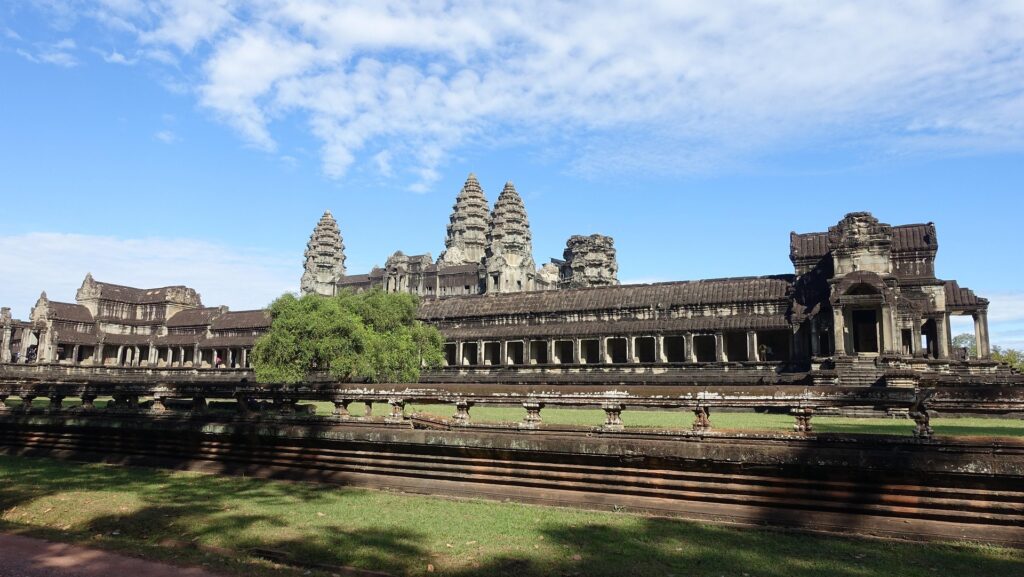
Vietnam’s invasion stopped the Khmer Rouge’s killing fields – an undeniable humanitarian achievement. But the new regime was another authoritarianism, propped up by Hanoi. Trust networks? Non‑existent. Categorical inequalities? Ethnic and political divisions persisted. Monopoly on violence? Khmer Rouge remnants fought on for years. The genocide ended; democracy never began.
Iraq (2003): A catastrophe wrapped in false flags
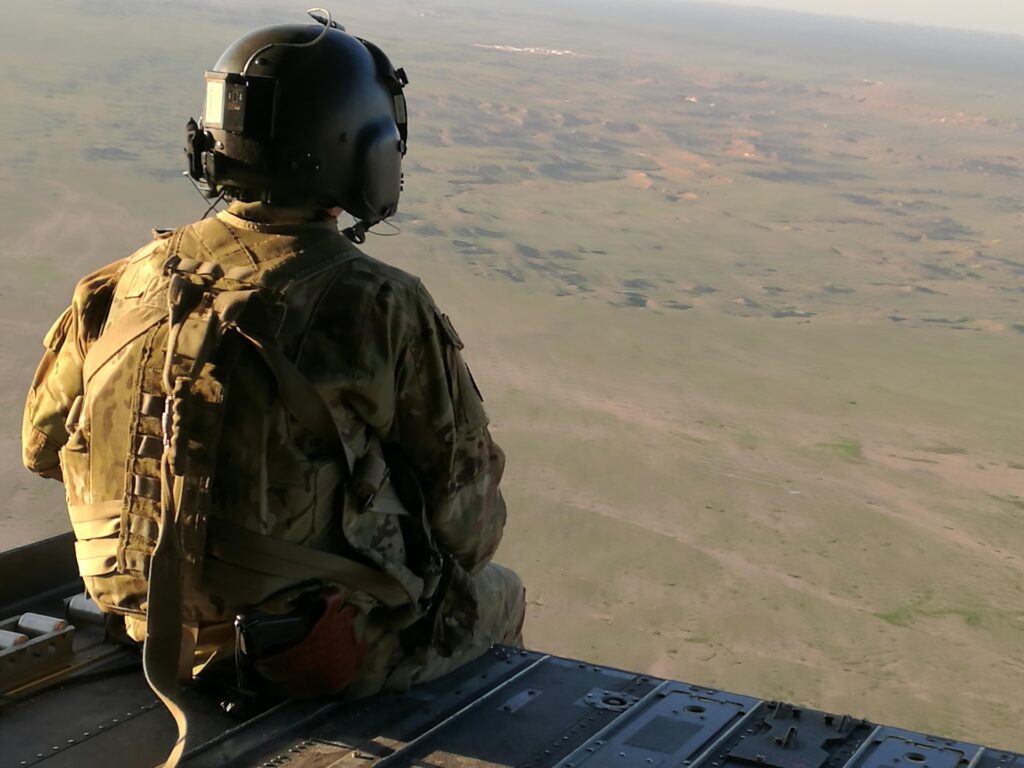
The U.S.‑led invasion had no active genocide to stop, no UN mandate, and a pretext (WMD s) that collapsed immediately. The result was not a new state but a failed state: hundreds of thousands dead, a sectarian civil war, the rise of ISIS, and a power vacuum that Iran filled. On every Tilly criterion, Iraq moved backwards. The invasion didn’t even scorch the earth – it salted it.
Neither intervention produced a democracy. One succeeded in the narrowest humanitarian sense (stopping mass death). The other failed entirely. Both prove Tilly’s point: you cannot bomb a country into trusting its tax collector.
Modern echoes: Libya, Syria, Kosovo
- Libya (2011) – A UN‑mandated no‑fly zone to protect civilians morphed into a NATO regime‑change operation. The result: a failed state, slave markets, and a permanent proxy war.
- Syria (2011–present) – The inverse lesson: inaction while a regime kills half a million people is also a moral catastrophe. But the lesson is not “intervention would have worked” – the lesson is that the international system has no good options once the guns start firing.
- Kosovo (1999) – The partial exception. An illegal but arguably legitimate NATO intervention stopped ethnic cleansing. Yet Tilly’s test shows incompleteness: trust between Albanians and Serbs is absent, ethnic inequality is institutionalised, and the state’s monopoly on force remains contested after 25 years.
Together, these cases close the loop: a UN mandate is no guarantee of success (Libya); its absence is not an automatic death sentence (Kosovo); and inaction can be as cruel as a badly chosen war (Syria).
Back to today: Is it worth it?
As the world watches the Iran‑Israel‑Hezbollah‑USA confrontation, the same seductive logic is being whispered: “We must destroy their ability to attack us.” “We must remove the regime.” “We must protect innocent civilians.”
But the historical record screams the opposite. Military intervention for regime change almost never produces a stable, democratic, peaceful outcome. Instead, it produces:
- Economic ruin – Iraq cost the U.S. over $2 trillion. Trillions more were lost in global trade, reconstruction, and refugee crises. A full‑scale war with Iran would dwarf those figures.
- Human catastrophe – Hundreds of thousands dead, millions displaced, entire societies traumatised.
- Regional chaos – Every intervention creates a power vacuum that is filled by the worst actors: militias, terrorists, or rival powers (Iran in Iraq, Russia in Syria).
- Strategic defeat – The intervenor rarely achieves its long‑term goals. The U.S. wanted a democratic Iraq allied with Washington; it got a Shia‑led government closely aligned with Tehran.
The only honest conclusion: bombing a country into democracy is a fantasy. The best you can hope for is to stop an immediate massacre – and even then, you will almost certainly fail to build a functioning state.
So, as leaders beat the drums of war, citizens should ask one question repeatedly: Is it worth it?
Look at Cambodia. Look at Iraq. Look at Libya. The answer is already written in blood, rubble, and economic waste.
*This article draws on original research by Fotis Bardakis (University of Patras Graduate/University of Athens Political Science and public administration US) and on the work of Tilly (2007), Wheeler (2000), Matlary (2006), Kiernan (2008), and others.*
Full Article In greek: https://drive.google.com/drive/folders/1sL8wy-k3PZbM0ZLqXjqq98kJE_ZmVu7q?usp=drive_link